Monday, February 6, 2017

In response to Fr. Stravinskas' notions of the Ordinary Form influencing the Ancient Rite

Good news NLM put up a critique which is probably way better then my stuff below: HERE

--------------------------------------------

Recently, Catholic World Report published an article that attempted to square the circle and identify exactly what Benedict XVI may have meant when he spoke of both “forms” needing to enrich each other. Now, I don’t know the Reverend authors intentions or his experience, but this was a seriously problematic take on every level possible; absolutely requiring a response

Adoption of the revised lectionary

Taylor Marshall has done a fantastic job addressing this: http://taylormarshall.com/2013/01/the-lectionary-of-holy-mass-one-year-vs.html http://taylormarshall.com/2015/10/catholic-mass-lectionary-omits-anti-homosexual-verses-from-romans-1.html

Incorporation of additional Mass formularies

In his book “The Mass: A Study of the Roman Liturgy”, Adrian Fortescue addresses why the Church did not incorporate so many prefaces into the liturgy. You can click the link below to access the particulars. But also, it seams odd that here the author is so desireous of having many options, whereas later on he stresses that “Virtue stands in the middle”. I think he likes his ideas too much, making excuses and being critical of the formulation of the ancient rite when he does not have the competence to speak.

https://books.google.com/books?id=OkwmAQAAMAAJ&pg=PA318&lpg=PA318&dq=mass+prefaces&source=bl&ots=0uPi9_kH1F&sig=3pU2Zi7lknu1jsE_s5WTzphuWTA&hl=en&sa=X&ved=0ahUKEwiyodD5k_TRAhUk64MKHWBfCHg4FBDoAQhJMAg#v=onepage&q=mass%20prefaces&f=false

There is also a position paper from Una Voce on this:

http://www.unavoce.ru/pdf/FIUV_PP/FIUV_PP8_PrefaceFinal.pdf


Expand possibilities for solemnity

The EF has clearly defined categories for the celebration of Mass: Low Mass, Missa Cantata, Solemn Mass. The normative form is the Solemn Mass, wherein a full complement of ministers functions, along with incense and chant. The Low Mass (which, in the United States, unfortunately, was the most familiar and common liturgical experience) had none of those components. The Missa Cantata is an attempt to have at least some of the solemnity, even without all the desired ministers. The OF does not have such mutually exclusive categories, thus allowing for as much solemnity to be incorporated as possible. And so, even at a daily Mass with a single priest-celebrant, one can chant any and all the prayers and use incense. Regrettably, that opening is not taken advantage of very often—even on Sundays. However, it would be a good element to add to the liturgical menu of the EF.

A) The Low Mass is most common because the seminaries refuse to teach the ancient rite, so it’s the beginning point for any priest of good will. Plus, a Solemn Mass can only be said once a day by a priest. Want less Low Mass’? Encourage priests to learn and regularly say the ancient rite and to not be so obsessed with saying the “ordinary form”. Plus there is the issue of having a deacon, which is not a guarantee at any Parish, even if a second priest stands in its still rare to have two priests. Encourage vocations. We all know the current model of permanent deacons is really an ordinary form thing, whereas the societies that offer the ancient rite, the transitional deacons are way more present. The possibility for Solemnity is increasing on the ancient rite site and we know what to expect, for the Novus Ordo (outside of a handful of churches here and there) it’s a crap shoot.

B) I see no reason why we are afraid to have exclusive Mass’. When I go to a Low Mass I know what to expect and it slightly changes how I will enter into the mystery, and with the other solemnities. Having knowledge and clarity is not a bad thing. Clarity is an aspect of Beauty, formlessness is not related to beauty… consider CS Lewis’ “Till we have faces”. Plus, its not like a Low mass could not be changed to a High Mass before hand. What is listed in the bulletin is the norm (and often helpful for young families for the obvious reasons), but it can be changed with necessary considerations.

Elimination of duplicate recitations

“In the celebration of Holy Mass, the priest moves in and out of various modes: at times, he prays as one of the faithful; at other times, he prays in persona Christi Capitis… there is no theological reason for him not to pray the text in union with the whole assembly”

- What is he talking about there is no theological reason? Why do so many of these priests buy into the modernist idea that useless repetition was involved in the ancient rite? The parish and choir are invited to sing the mass at times, but this does not mean the priest should not undertake his duties to say the Mass that is put before him. His recitation is not without merit for the action. You may dislike repetition but God has no issues with hearing his word spoken again and again, anymore than God has issues with Lord have mercy said by the priest and people separately. The priest has an office separate from the laity, that they should execute the office separately when the Church has ask them to in the past is not pointless.

- Before I move on, the garbage notion that the ancient Rite had useless repetition is just that. Fr. Ripperger addressed it in an article: “The third thing that the ancient liturgy provides is repetition. Now modern man has rejected repetition because he has a fixation on novelty. Novelty, of course, gives our appetites delight but does not necessarily indicate depth. To enter into something in depth requires time and repeated considerations of a thing. Repetitio mater discendi, as we say in Latin: repetition is the mother of learning. This principle applies not only to learning but to our spiritual lives as well. By repeating a prayer, its meaning becomes more known to us and therefore is able to be entered into more perfectly and with greater depth. Since the ancient rite allows not for novelty but repetition, it provides a way in which people can focus on the mysteries present rather than the new things that are constantly popping up. With the silence quieting our faculties and the repetition that characterize each Mass, we are able to participate in and enter more perfectly into the mysteries of the Mass. Too often participation is equated with physical activity rather than the higher and more active form of participation which is spiritual participation” . Those who attend the EF will know the awkwardness of the current rubrical practice, especially when a text calls for a gesture on the part of the priest (e.g., the Sign of the Cross to end the Gloria or the genuflection during the Credo) which is not “in sync” with what is being sung because the schola/congregation have not gotten there yet. - What is this priest talking about? Awkwardness? This is a subjective take that ignores just order and proper piety. Every action has meaning so too with the two Glorias, it does not confuse those that go to the ancient rite regularly, so he is just over his head on this

Restoration of Offertory Procession and Prayer of the Faithful

“Both of these rituals were specifically identified by SC as elements to be restored. The emphasis here is on “restored”; unlike some other rites introduced into the post-Vatican II liturgy,” - Later on he will jabber about antiquarianism… he is all over the board wherever it suits his modern notion of “liturgy” these two have a venerable tradition to them. - Which ended in the 11th century. While I don’t have an issue with either I would ask how this has really impacted those that now see it in the new rite. Though slight, there is a processing of the gifts up the steps of the Altar, which is easy to see and also has the same symbolism of elevating the normal to the sacred. And if we really wanted to restore the specific tradition of the “Prayers of the faithful” I would not look at the ambiguity of the new Rite, but to the actual ancient practice as Dr. Kwasniewski describes below:

http://www.newliturgicalmovement.org/2015/05/how-can-we-elevate-quality-of-prayer-of.html#.WJSlfFMrKCp


Re-order the dismissal rite

The EF dismissal rite is anti-climactic, inasmuch as the priest dismisses the congregation and then bestows the blessing, followed by the Last Gospel. The OF has a more logical conclusion, in that the “Ite, missa est” is truly the last word. Perhaps the Last Gospel could be retained as an optional text, given its historical value.

- The importance of the Last Gospel is taken up in the Fisheaters Forum:

http://www.fisheaters.com/forums/index.php?topic=3444395.0


- It is also of interest that a Mexican Archbishop recently restored the Last Gospel in his diocese:

http://rorate-caeli.blogspot.com/2017/01/mexican-archbishop-orders-last-gospel.html


Move the “fractio”

In the OF, the “breaking of the bread” occurs during the Agnus Dei, which is the quintessential hymn to the “Lamb who was slain.” The action and the text for this rite in the EF do not correspond to each other as well.

- So, it occurs just before the Agus Dei in the ancient Rite, but during in the Novus Ordo… why exactly is it more fitting they should not have distinct observations? Make clear that the homily is a true part of the Sacred Liturgy Removing the maniple and donning the biretta during the homily (along with the opening and closing Sign of the Cross) declare that the homily does not form part of the Mass; indeed, that is an “interrupter.”

- Im not sure why he wishes to call a sermon an interrupter. It would be more close to an intermission during a play. The Play does not include it among its parts, but it is observed. Outside of Sundays the Church does not demand a sermon be delivered at either rite. Saying the sermon is part of the Mass is just pure novelty. It’s nice to have, but not necessary considering the sermon can vary greatly, especially now.

- Plus removing the maniple is considered a sign of authority, not an issue of being outside Mass (see Taylor Marshall) On the contrary, the homily is an essential part of the Sacred Liturgy.

- False, its rarely said, and is not essential period.

Furthermore, if it is not such, then any baptized Christian should be able to deliver it!

- So… the Church cant bind outside the Mass… what?

Maintain the integrity of the Sanctus

When polyphonic Masses are sung, it is not unusual for the Benedictus to be separated from the rest of the Sanctus, being sung after the Consecration. This is an obvious accommodation to the problem of a musical offering that so overshadows the liturgy itself that it cannot be performed without creating an undue delay in the celebration. If a musical composition would have that effect, it certainly comes under the condemnation of Pope Pius X’s Tra le Sollecitudini. Beyond that, if it is being used as a “filler” for the silence after the Consecration, it flies in the face of the whole rationale for an inaudible Canon, evoking a deeper sense of mystery.

- I’m not familiar with this issue so I don’t have a take.

Adopt the rubrics of the OF for the Communion Rite

If the Pater Noster is the prayer of the family of the Church to her heavenly Father, why should not the entire congregation pray it together? Of course, Pope Benedict’s norms in SP already allow for that, however, I have rarely seen the option taken. It would also make sense to have the other prayers of the Communion Rite recited audibly or chanted aloud (as in the OF), with the priest’s private preparation prayers done sotto voce (again, as in the OF).

- Purely subjectivism which I see no reason to change anything for.

Face the people when addressing the people; face God when addressing God.

We have used this formula to justify celebrating Mass ad orientem in the OF, that is, to face liturgical east from the Liturgy of the Eucharist forward. The converse is also true: when proclaiming the Scripture readings, face those to whom those texts are addressed. Whatever the historical origins of facing east for the Epistle and facing north for the Gospel at Solemn Mass, they are not truly communicative of the significance of the rite being celebrated.

- He assumes that the scriptures are read specifically since the people are there. But if the priest says a private mass and has no audience does that mean the scriptures are not meant for the people? Of course not, but the readings are first said as a reminder to God, just as the trumpets were played in the temple not for the peoples enjoyment or learning, but as a reminder to God as to what they had received from him

- Plus in the novus ordo anyone, including prots are welcome to deliver the readings outside the Gospel… which begs the question.

- The epistle is prayed from the south because the Gospel as not been taken to the nations yet, which symbolically happens at the movement of the missal from South to North.

- The lectionary is not purely a learning device. This is creeping Protestantism, but if you do follow them and learn that is welcome, yet unneeded.

- Una Voce addresses the Lectionary in Latin in one of their position papers:

http://www.unavoce.ru/pdf/FIUV_PP/FIUV_PP16_VernacularLectionsFinal.pdf


Unite the calendars of the OF and EF

For the EF to be unable to commemorate the saints canonized since 1962 is an impoverishment—a point also raised by Pope Benedict in SP.

- Sure we can probably agree here Certain calendar changes were good (e.g., making the Solemnity of Christ the King the last Sunday of the liturgical year)

- But the feast was not meant to be an eschatological event. At the end of the liturgical year in the ancient rite we already observed this sovereignty over all in a different manner. Its not like Pius XI all of the sudden thought we were missing this, just look at the last day readings. , while others were destructive of long-standing traditions (e.g., Epiphany, Ascension). Regardless of what one thinks of either calendar (and no calendar will ever be perfect), operating with a dual-calendar system bespeaks division, the very antithesis of what good liturgy should be.

- All of this is playing off the idea that it’s a single rite… this is a weird game of denial for the sake of calming the mind with complacency.

Modify the rubrics SC calls for the modification of signs and symbols that are duplicative or arcane.

 One thinks immediately of the multiple Signs of the Cross during the Canon. Just as the OF admits of a certain laxity, the EF can lean toward an unhealthy rigidity or rubricism. In medio stat virtus! (“Virtue stands in the middle”).

- See the note on repetition above. The notions of rigidity should be a clear give away. Now follow the dog whistle.

Rename the two principal parts of the Mass

To continue to call the first part of the Mass the “Mass of the Catechumens” is a form of the antiquarianism pilloried by Pope Pius XII in Mediator Dei. We have not been dismissing catechumens (or penitents) for centuries (except in silly parishes where baptized Christians preparing for reception into full communion are “dismissed”).

- If this terminology was reintroduced then it would be antiquarianism, but considering it has remained in East and West without the “feeling” of it needing to be changed because (((nomenclature))), I think this is just another way to separate us from the tradition. The post-conciliar nomenclature is quite accurate: Liturgy of the Word/Liturgy of the Eucharist.

- Plus non-Catholics are still to observe the different parts of the liturgy in separate manners, so tough, it should stay on tradition alone.

When I asked Taylor Marshall his thoughts here was the response:


Fr. Hunwicke also wanted on the critique: HERE

Just an idea. Instead of seeking out someone that has been formed in the new theology and has only had limited liturgical experience in the ancient Rite, why not ask someone that daily says the Ancient Rite about what might be beneficial to it? Modernists will not rest until the ancient Rite is stripped... Thank the Lord for the ICRSS who use older books than the '62.

 
STAUP!


Friday, February 3, 2017

Update on Fr. Terra FSSP


You may remember Fr. Terra from the story of Fr. Kenneth Walker. I am happy to say that Father is daily increasing stamina and is back to constructing beautiful high altars


Please continue to keep Fr. Walker and Fr. Terra in your prayers!


Tuesday, January 31, 2017

The LMS of England gives their Rorschach Option

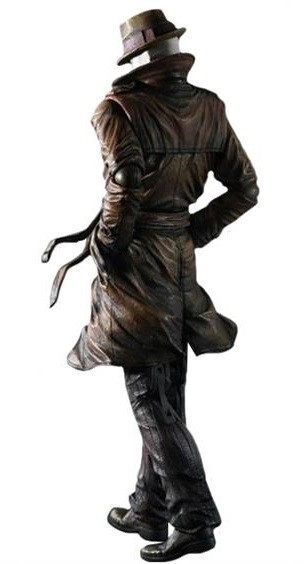
In the movie Watchmen, the character Rorschach gives an excellent opening monologue which I think plays well with the current situation:


"Dog carcass in alley this morning, tire tread on burst stomach. This city is afraid of me. I have seen it's true face. The streets are extended gutters and the gutters are full of blood and when the drains finally scab over, all the vermin will drown. The accumulated filth of all their sex and murder will foam up about their waists and all the whores and politicians will look up and shout "Save us!"... ...and I'll look down, and whisper "no."'


If the spats with the FFI and the Order of Malta have shown us anything, it should make us recognize the time and prep for likely ends.  The Latin Mass Society of England has put out a series of how the ancient liturgy can be a true bulwurk against the modern nominalists and modernists alike:


"The advantages the Traditional movement has in the current crisis are both tactical and strategic; I shall give two examples of each. Consider the tactical ones first.


"The recent history of the FFI and the Order of Malta illustrate two important tactical realities. One is that the Traditional Mass is a de facto rallying point for orthodoxy on a wide range of issues. (This has been the fear of opponents of the ancient Mass from the beginning.) The other is that internal divisions, including divisions about the liturgy, provide both an excuse and a point of leverage for attacks on an organisation (/ group / parish). It follows from these two undeniable facts that the Traditional movement has an obvious advantage. It is by definition united around this banner of orthodoxy.

...


The second tactical advantage is that the Traditional movement is not dominated by any one organisation: the blogs, priestly Institutes, lay groups, periodicals and so forth all exist among a good number of others of their kind. The suppression of one or another would not be the same kind of disaster as is the suppression of the FFI or the Order of Malta, because resources and support can be transferred between them far more easily than between non-traddie conservative organisations. Traditional groups are not interchangeable, but the fact that they support the Traditional Mass is a decisive reason for nearly everyone who supports them, to support them, and these supporters are, normally, already very familiar and friendly with other Traditional Catholic groups and organisations, and would be highly likely to find another group to support instead, were their current favourite to disappear. The orthodox Catholics who support the Order of Malta (as with other worthy conservative bodies) do so for all sorts of complex reasons, and if the Order were, for practical purposes, to disappear, they would be scattered to the four winds. As a force for good the Order would be gone, and no similar organisations would be proportionally strengthened. This is not a criticism of the Order, but in the current crisis it is a disadvantage.

...

The first strategic reason is this. As the cases of the FFI and the Order of Malta illustrate, internal struggles over teaching and liturgy are endemic within conservative Catholic organisations, and within the broadly understood ‘conservative Catholic movement’, if we want to call it that. The tactical consequence, of offering an opening to the enemy, has already been noted. The strategic consequence is that this makes them a terrible front in the war in which to invest resources, not just because of this tactical vulnerability, but because so much of one’s efforts will be spent on internal, organisational conflict. You might say: these internal battles need to be fought. Well, that is a judgement each person needs to make on the spot. The organisation at issue may be in a great position to make a valuable contribution to the struggle if only X, Y, and Z internal battles are won by the good guys, and that may be a realistic prospect. In my experience such prospects are never as rosy as one imagines. Nevertheless, if you really judge that to be so, good luck to you, but remember this: while this battle is going on, the efforts going into the internal battle are not going into the apostolate. They are not doing the work the organisation is supposed to be doing. In the meantime, you are helping to keep an organisation afloat which may be doing bad things as well as good ones. And finally, in my experience internal battles are disproportionately exhausting and demoralising, whereas work ad extra can be very rewarding and energising...."

You can read the rest of this rest of this series HERE


Thursday, January 26, 2017

Breaking Luther: Martin was a Manichean, teaching both an evil Jesus and a good Jesus

 
The idea that Martin Luther just wanted to restore the early Church is laughable, but he did personally teach the early heresy of Manicheanism as his own.


"For most of post-Reformation history, it has been axiomatic in theological histories of the controversy to propose Martin Luther as a devoted follower of the theology St. Augustine of Hippo, the great opponent of the Manichees. This is not surprising, given that Augustine is often invoked by the Reformers against Catholic dogma, that heretics such as Calvin and Cornelius Jansen have made a corrupted Augustinianism the center of their doctrines, that Augustine's bold stance in favor of grace against the Pelagians lent itself to a certain degree of use by Reformers arguing in favor of sola fide and double-predestination, and that Luther himself was an Augustinian monk. Contemporary scholarship, however, reveals quite a contrary picture of Luther. Far from invoking Augustine against Rome, Martin Luther shows himself disdainful of the great doctor of Hippo, and in fact an advocate of the dualist theology of the Manichees.

…

How could these important elements of Luther's thought get lost? Theobald Beer points out that what we now know as "Lutheranism" is really the thinking of Luther's successor, Philipp Melanchthon, who was Luther's interpreter and advocate, who nevertheless diverged from Luther on several important points. Unlike Luther, Melanchthon held the Church Fathers, especially Augustine, in a certain level or reverence, admitted the usefulness of philosophy in theological studies, and tended towards a certain irenicism that Luther found troubling. Melanchthon brought these characteristics into the Lutheran cause and served to moderate the Lutheranism of the latter 16th century against some of Luther's more extreme positions.

…

In Luther's glosses, he refers to Christ not as a person, but as a compositum, a composition; this is necessary, since he asserts that divinity and the diabolical are co-existing within Him; Christ is a composition of humanity and divinity. Here Luther is opposing the traditional concept of a single, personal hypostasis, which he will argue against his entire life. This was a huge point of divergence between Luther and Melanchthon; after Luther's death, Melanchthon stated, "The formulas to be rejected are: 'Christ is composed of two natures' and 'Christ is the fruit of creation.'" The former is obviously an attempt to move the Lutheran movement away from Luther's heretical compositum view, and thus Lutheranism would maintain the the traditional formula of hypostasis. Here Luther is especially against Augustine, which we will say more on shortly.

Beer stresses that Luther fixates much more on the role of Christ rather than on His identity; what Christ does is more important than who He is. For Luther, Christ has two functions. "The first," says Theobald Beer, "is the function of shielding us from divine wrath and the second that of giving us an example. This is twofold justification." [4] The human nature of Christ, because it adopts the sinful disposition of fallen man, in fact becomes sin. This is where a Gnostic-Manichaean dualism enters into Luther's thought. There could be no reconciliation between sinful flesh and the divine nature. This is why Christ is compositum but not hypostasis. "

You can read the whole of the article HERE


Tuesday, January 24, 2017

Ryan Grant on the reliability of Canon Hesse's teachings

I figured there was so little out there to directly challenge Hesse at this point but Ryan Grant did call him out recently


Wednesday, January 18, 2017

On the Gaffigans’ and a good question on the Malta situation

File this in the same stack as Stephen Colbert catholics.

As much as I enjoy most of Jim Gaffigan’s material, I am utterly frustrated by how these folks can fall into the dumbest of traps. Now many people will say, “But, they don’t use contraception”. As if that was the sole distinguishing mark of a Catholic. No, what he has been shown to push is of grave concern, and that so many Catholics have been silent on this – I’m looking at all of you that push Gaffigan stuff on Catholic Blogs, news sources and at official Catholic gatherings – is a grave disgrace. There was not a single show where he did not try to use his platform to normalize sodomidic behavior. For crying out loud they made one of the family helpers/advisors a sodomite and never, ever attempted a plea to the individual to change. They brought him into the home to influence the kids, and effectively normalized his disorder by making him a regular on the show. And in case you need more that same actor decided he needed to act up the other day.

----------------

The other thing worth touching on is this Malta bishop’s situation. CCC, on their Twitter feed made a good observation (which could be applied to many things):


It is a fair question to ask I believe…

+JMJ+

Monday, January 16, 2017

St. Bridget of Sweden: Christ's words to the five men of this world

Taken from "The Prophecies and Revelations of Saint Bridget (Birgitta) of Sweden: Volume 1"


“I am the Creator of all things. I was born of the Father before Lucifer. I am inseparably in the Father and the Father in me and one Spirit in us both. Accordingly, there is one God – Father, Son and Holy Ghost – and not three gods. I am the one who promised the eternal inheritance to Abraham and led my people out of Egypt through Moses. I am the one who spoke through the prophets. The Father sent me to the womb of the Virgin without separating himself from me but remaining inseparably with me so that mankind who had abandoned God, would return to God through my love

But now, in your presence, my heavenly host, although you see and know all things in me, yet for the sake of the knowledge and teaching of my bridge standing here, who cannot understand spiritual things except through a corporal parable, I make a complaint before you over these five men who are standing here, for they provoke me to wrath in many ways. Just as I, once, in the Law, with the name of Israel, signified the whole Israelite nation, so now by these five men I signify every man in the world.

The first man signifies the leader of the Church and his priests; the second, the evil laity; the third, the Jews; the fourth, the heathens; and the fifth, my friends. But from you, Jew I exclude all the Jews who are Christians in secret and who serve me secretly in a pure love, a right faith, and a perfect deed. And from you, heathen, I exclude all those who would gladly walk in the way of my commandments, if they only knew and were taught how they should walk and live, and who with their deeds do as much as they know and are able. These shall by means be judged with you.

I now complain over you, o head of my Church, who sit on my seat which I gave to Peter and his successors to sit on with a threefold dignity and power: First so that they would have the power of binding and loosing souls from their sins. Second, so that they would open Heaven for the penitent. Third, so that they would close heaven to the damned and to those who despise my Law. But you who should be healing souls and presenting them to me, you are in truth a murderer of souls. I appointed Peter as shepherd and guardian of my sheep. But you, however, scatter and wound them, You are worse than Lucifer. For he was envious of me and desired to kill none but me so that he could rule in my place. But you are so much worse, for you do not only kill me by driving me off from yourself by your bad deeds, but you also kill souls by your bad example. I redeemed the souls with my blood and entrusted them to you as to a faithful friend, but you deliver them back again to the enemy from whom I redeemed them. You are more unrighteous than Pilate. He judged no one else but me to death, but you not only judge me as if I were a powerless lord and worthy of no good thing. No, you also judge and condemn the souls of the innocent and let the guilty go free without rebuke. You are more cruel than Judas who only sold me, but you not only sell me, but also the souls of my chosen men for your own shameful profit and vain name’s sake. You are more despicable than the Jews, for they only crucified my body, but you crucify and torture the souls of my chosen men for whom your malice and your sins are more bitter than from any wound from a sword. And so, since you are like Lucifer and more unrighteous than Pilate and more cruel than Judas and more despicable than the Jews, I complain over you with justice.

To the second man, that is, to the laity, our Lord said; “I created all things for your benefit, You gave your consent to me and I to you. You gave me your faith and promised by oath that you would serve me. But now, you have deserted me like a man who does not know his God. You hold my words for a lie and my deeds as vanity, and you say that my will and my commandments are too heavy. You have violated the faith you promised me. You have broken your oath and abandoned my name. You have separated yourself from the number of the saints and have come to belong to the number of the devils and you have become their friend. You think that no one is worthy of praise and honor but yourself. Everything that belongs to me and that you are bound to do for me appears heavy and bitter for you, but the things that please yourself are very easy for you. Therefore, I complain over you with right for you have broken the faith you gave me in baptism and later; and for the love I have shown you in word and deed, you mock me and call me a liar, and for my suffering you call me a fool.

To the third man, that is, to the Jews, he said: “I began my deed of love and you and I chose you as my people. I led you out of slavery, I gave you my law, I brought you into the land I had promised your fathers, and I sent you prophets to console you. Thereafter, I chose a virgin for myself from among you from which I assumed Manhood. But now I complain over you since you do not want to believe in me, but say: “The Christ has not yet come; he is still to be expected’”.

Our Lord said to the fourth man, that is to the heathens: “I created and redeemed you like the Christian man, and I created all good things for your sake. But you are like a man out of his senses, because you do not know what you are doing. You are also like a blind man, because you do not see where you are going. You honor and worship the created things instead of the Creator and the false instead of the true, and you bend your knee before things that have less worth than yourself. That is why I complain about you.”

To the fifth man, he said: “My friend, come closer!” And he directly said to the heavenly host: “My beloved friends, I have a friend with which I signify and mean many friends, he is like a man trapped among evil people and harshly shackled in captivity. If he speaks the truth, they beat his mouth with stones. If he does something good, they thrust a spear into his breast. Alas, my friends and saints, how long shall I endure such men, and how long shall I tolerate such contempt?”

Saint John the Baptist answered: “You are like the most pure mirror, for we see and know all things in you as in a mirror without any help of words and speech. You are the sweetness that no one can describe in which we taste all good things. You are like the sharpest of swords for you judge in righteousness.”

Our Lord answered him: “Indeed, my friend, you said the truth, for my chosen men see all goodness and righteousness in me, and even the evil spirits see it in their own conscience but not in the light. Just like a man placed in a dark prison, who had earlier learned the letters, knows that which he had learned before even though he is in darkness and currently cannot see, so it is with the devils. Even though they do not see my righteousness in the light of my clarity, they still know and see it in their conscience. I am also like a sword that separates things into two parts. In this way I give each and every person what they deserve.”

Then Our Lord said to Saint Peter: “You are the founder and defender of the faith and of my Church. While my host is listening state the sentence of the five men!” Peter answered: “O Lord, all praise and honor to you, for the love you have shown to your earth. Blessed be you by all your host, for you allow us to see and know all things in you that have been and will be, and that is why we see and know all things in you. It is true justice that the first man who sits upon your seat, while having the deeds of Lucifer, should shamefully lose the seat he dared to sit on and become a partaker in the torment of Lucifer. The right judgment of the second man is that he , who has fallen away from your faith, should fall down to hell with his head down and feet up, for he loved himself and despised you who should have been his head. The right judgment of the third man is that he will not see your face and that he should be tormented for his malice and greed, since unbelievers do not deserve to see your glory and beauty. The right judgment of the fourth is that he should be locked up like a man out of his senses and banished to the city of darkness. The right judgment of the fifth is that help should be sent to him.”

Then our Lord answered: “I swear by God the Father, whose voice John the Baptist heard in the Jordan; I swear by the body which John baptize, saw, and touched in the Jordan; I swear by the Holy Ghost who revealed himself in the form of a dove at the Jordan, that I shall do justice with these five men.”

Then our Lord said to the first of these five men: “The sword of my severity will go into your body; it shall enter at the top of your head and penetrate you so deeply and violently that it can never be drawn out. Your chair will sink like a heavy stone and never stop before it comes to the lowest depth. Your fingers, that is, your assistants and advisers, will burn in the inextinguishable sulfurous fire. Your arms that is your office-holders, who should have reached out for the help and benefit of souls but instead reached out for worldly honor and profit, will be judged to the torment and suffering of which David speaks: “His sons shall be fatherless and his wife a widow and others shall take his property.’ Who is ‘his wife’ if not the soul which shall be excluded from the glory of Heaven and be widowed and lose God? ‘Their property’, that is the virtues they appeared to have, and my simple and humble men who were under them, shall be separated from them, their honor and property will be given to others, and they will inherit eternal shame instead of their dignity and glory. Their headgear will sink down into the filth of hell, and they will never be able to get up out of it. Just as they rose above others through their honor and pride, so in hell they will sink so much deeper than others so that it will be impossible for them to ever stand up again. Their limbs, that is, all the priests who followed and helped them in wickedness, will be cut off from them and severed just like the wall that is torn down where not a single stone is left upon another stone and the cement no longer adheres to the stones. No mercy will come to them for my love will never warm them nor restore or build them up into an eternal house in Heaven, but instead they shall be excluded from all good and endlessly tormented with their headmen and leaders.

But to the second I say: “ Since you do not want to keep the faith you promised me and have love toward me, I shall send an animal to you that will rise from the surging torrent, and it shall swallow you. Like the torrent always flows downward, so this animal will drag you down to the lowest hell, and just like it is impossible for you to travel upstream against the surging torrent, it will be just as hard for you to ever ascend from hell.

 To the third I say: “Since you, Jew, do not want to believe that I have come, you will see me when I come on judgment day, but not in my glory but in your conscience, and you will come to know that all the things I said were true. Then there is nothing left for you, but to be tormented as you deserve. To the fourth I say “Since you do not care to believe and do not want to know me, your darkness will be light for you, and your heart will be enlightened so that you may know that my judgments are true, but you will still not come to the light.

To the fourth I say: "Since you do not care to believe and do not want to know me, your darkness will become light for you, and your heart will be enlightened so that you may know that my judgments' are true, but you will still not come to the light."

To the fifth I say: “I shall do three things to you. First, I shall fill you inwardly with my fervor. Second, I shall make your mouth harder and firmer than any stone, so that the stones turn back to the ones throwing them at you. Third, I shall arm you with my weapons so well that no spear will harm you, but instead everything will melt before you like wax in the heat of the fire. Be therefore made strong and stand like a man. For just like a knight in battle who hopes for help of his lord and continues fighting as long as he still has some life-force in him, so may you too stand firm and fight like a man; for the Lord your God, who none are able to withstand will give you help. And since your number is small, I will honor you and multiply you greatly. Behold my friends, you see these things and know them in me, and in this way they stand before me.

The words I have now spoken will be fulfilled. But these other men shall never enter my kingdom, as long as I am King, unless they better themselves. For Heaven will only be given to those who humble themselves and to those who mourn over their sins with penance.” Then all the host answered: Praise be to you, Lord God, who are without beginning and without end.”