Showing posts with label chesterton. Show all posts

Friday, October 7, 2016

The Heresy of Race: Chesterton as prophet in showing the connection between Hitlerism, Prussian identity and the Jewish notion of racial superiorit

Note: I do not necessarily agree with everything said by the authors herein, but it is worth understanding without name calling

** I will first post a link to GK Chesterton’s article on how the Jewish understanding of racial superiority and how it influenced the prussian mind that would later have a role in Hitlerism(fyi, the Church does not support the idea of race, she recognizes ethnicities, but ones DNA is not regarded in Catholic tradition) . After which I will post a short excerpt from a website that goes more into depth on the essay. Finally, it is worth noting some parallels in the current build up of Russian identity as the Third Rome and so forth. So here we go

The Judaism of Hitler – GK Chesterton
SOURCE

Click here for article

“...Deliquescent religious syncretism always weakens the integrity of the cultural immune system and subverts a healthy resistance to intrusive and destructive ideologies and alien faiths. But, in addition to this kind of Dialectic of “Solve et Coagula” – i.e., a sort of Hegelian process of emergence and convergence, or amalgamation and “aggregation into larger political units” – Chesterton also saw another, narrower and more concentrated development: namely, a certain very incongruous combination of “heathenry and heresy;” a sort of Hegelian consolidation of “Old Testament Christianity” and a New Heathenism. It was the ideology of Prussianism: an eclectic amalgamation of Lutheranism and Neo-Paganism, which then developed into the Neo-Paganism and Hitlerian “Heresy of Race.” It appeared to him to be deeply rooted in Prussia, although Chesterton saw it coming from even deeper spiritual and historical sources, as we shall see...

Chesterton's deep discernments and warnings about the impending danger of a “narrow national and tribal fury” and the towering weakness of intellectual and spiritual Pride should help us understand, in order to resist, both aggressive American “Exceptionalism” today and its self-destructive arrogance, and Christian (as well as Judaic) Zionism's comparably insolent sense of “Chosenness” and “Morally Immune Exclusiveness.” Like Chesterton's own “vivid conviction” about neo-Pagan “Prussianism,” we see these later developments, too, as “a poison to the world.”...

One of Chesterton's specifically profound and farsighted essays, entitled “The Judaism of Hitler,” will, furthermore, help us see the deeper background of World War II; but it will also aid our understanding of the current wars we are in, and not only in the Middle-East. We may also thereby come to realize why there are now so many growing barriers, and even legal penalties, as well as various psycho-techniques of intimidation, set up against any candid scholarly inquiry into certain neglected or hidden truths of history, especially the history of World War II, but even of World War I. Chesterton himself saw that “the Armistice” after World War I was not truly a “Peace,” but rather, only “a Truce”: a mere temporary “stacking of arms,” full of bitterness, and with a latent explosiveness, indeed. Chesterton, reflecting upon the then-impending second War in Europe and the wider world, saw “Hitlerism” itself as a further manifestation of “Prussianism,” though with an admixture of some new “biological,” as well as “Asiatic” and often “Gnostic,” ideological variants. “Hitlerism's” own “racial arrogance” prompted the generous and humble Chesterton to make his own trenchant “analysis of the heresy of Race,” and to resist the permeating and resurgent spiritual disease of Pride.

In a certain sense, “Hitlerism” was for Chesterton a sort of “New Prussia,” with an added Asiatic spirit of the Huns, as well as the haughtiness of “the Nordic Man” and a new form of an old thing: “the heresy of Race.” Because of this combination of cruelty and cold Pride, Chesterton himself retained that “vivid conviction that Prussia was Prussianism and Prussianism a poison to the world”  – like their contemporary Asiatic analogue, Japanese militarism. But, he adds, with his unmistakable irony: “General Goering may be trusted to teach us better; till we learn at least thatnothing is so anarchical as discipline divorced from authority; that is from right.”[11] (The New American Empire, however, with its own blinding Pride, seems not yet to have learned this lesson: this truth about Power divorced from moral authority and its ill-fruits of anarchy.)

Because of its own pervasive Pride, Chesterton mightily opposed the martial ideology of “Prussianism” and the “Prussian militaristic government,” even from its inception; but he especially opposed its later public dominance over what he calls “the Old Germany,” which included “Austria,” as well. His reasons for his resistance are important, and timely:

As man may say, as a scientific fact, that there is in Northern China a well of petroleum, we said [before, during, and after World War I] that there is in Northern Europe a fountain of poison. It is a fact; it continues to flow. It is obviously nonsense to call it Germany. It is not really satisfactory even to call it Prussia. It is much more satisfactory simply to call it Pride. It is a thing of the spirit; it is not a nation; it is a heresy [a combination of “heathenism and Lutheranism”]. It is an idealoutside the European ideal; outside what most of us would call the normal human ideal. It is something alien to Europe, which Europe cannot digest and did not destroy.

Thus, as of the early 1930s, especially, says Chesterton: The result is that Prussia begins to reappear; which means that Militarism [as in Japan and in Kemal Ataturk's Turkey] begins to reappear. Prussia means Prussianism now exactly as it meant Prussianism then; it always did, it always does, and (short of a spiritual conversion) it always will. Prussia is a patch of eighteenth century heathenry and heresy [and of Old Testament Christianity], which never did believe, nor (to do it justice) generally pretend to believe, in any sort of international ideal or common code of Christendom [much less the Creed of Catholic Christendom]. From the first command of Hohenzollern to the last appeal of Hitler, it [“Prussianism”] is the most simple, one-sided, savage tribal patriotism .... The consequence is that Prussia is the one European State that [as of the mid-1930s] may at any moment wage [like America today] an aggressive war. We all said this steadily for five years [1909-1914] ...; and some of us have always refused to unsay it. But a good many [the New Pacifists] seem to have been ashamed for ten years [1919-1929] of having told the truth; and are still ashamed, even when [circa 1933-1935] the truth has once again come true.

The reality called Europe made sense to Chesterton only when “you see Europe as Christendom.” Therefore, this alien thing called “Prussianism” (as an ideology and spirit, and a stunting deformation) is something difficult for him to characterize with fair adequacy. He says:

It is difficult to find a fit word for it [this alien spirit] .... The nearest definition I know is this. The civilized man, like the religious man, is one who recognizes that something exists besides himself .... what medieval people called Christendom or the judgment of all Christian princes; what any Christian will call the conscience of man as a witness to the justice of God .... But in one way or other that is the test; that the man [or nation] does not think his dignity lowered by admitting a general law [like the Natural Moral Law or the Ten Commandments or the Sermon of the Mount]though it might go against him.

Further describing this truly alien and destructive spirit of “Prussianism,” Chesterton says:

There does really lie to the north-east between us [in Britain] and the Christian State of Poland and the almost Asiatic State of Muscovy, a real independent source or spring of the opposite spirit [to traditional Christian Europe]. It is not only something that praises itself; it is something that needs no praise except its own .... He [i.e., the Prussian] is simply proud of himself and his sort; and would be equally proud of wrecking [Catholic] Christendom or enslaving humanity. This is the problem of Prussia, which is not even the problem of Prussians, but only of Prussianism. It is certainly not the problem of limits they have accepted and the [Prussian] leadership they have obeyed. But the point is that something unbaptized and barbaric does remain among the [European] nations; as it would say unconquered; as we should say, unconverted; and, anyhow,entirely unrepentant.

We shall soon see that this “Prussianism,” in Chesterton's farsighted understanding, is at the roots of “Hitlerism” and its own “racial arrogance,” although “Hitlerism” ultimately drew upon an older source, as well. The idea of a “Chosen People” can very easily become pervaded with the spirit of Pride, which is, once again, not a spiritual strength, but, rather, a towering spiritual weakness.

In such “Prussianism,” as in the more intense “racial arrogance” of the later “Hitlerism,” Chesterton would always say: “There is that fountain of poisonous pride, there is that isolated idolatry of self.” Moreover, he would add:

And clear and honest thinking must not shrink from starting afresh with that first fact [i.e., that the 1918 Armistice was not a Peace], that there is in Christendom, unconverted and unconquered, a force that is not Christian. Surely it is not so very impossible to believe that it was this [“Prussianism”] that threatened the world with war in 1914; when it is obviously this [i.e., this “Prussianism” which is to be found in the new Hitlerism and in the very “Judaism of Hitler”] that threatens it with war now [in the mid-1930s]?

With characteristic magnanimity and humility, Chesterton says:

Let us forget for a day whatever we may think about the faults of others [like the Pride of “Prussianism”]; and pray that we may not again wreck the hope of the world by faults of our own. Let us pray that if the challenge [of a New War] does indeed come again, we may not meet it byrandom slander or roaring self-righteousness .... Let us pray to be delivered from the vices and vulgarities of our own [decadent and post-Christian] civilization; and all the more if we sincerely believe that it is still a civilization, and may need to be defended from something that is still a savagery.

Becoming more specific about the deeper and now more developed “Prussianist” threats in “Hitlerism,” a modest Chesterton winsomely adds:

If the ruin that fell on the House of Hohenzollern [in World War I] was, as I still believe, a doom earned and provoked by the dehumanized pride of Prussia, we [Christians and British] must not forget that the vast economic collapse [in 1929] that has affected the victors [in World War I] hasalmost as much of the quality of a great historical judgment; and the rebuke of fate to our own mercantile and mechanical [and now psycho-electronic] culture. In so far as modern men can face such facts frankly, they will be worthy to find peace or fitted to face war.

With this brief background-consideration of “Prussianism” and its own “poisonous fountain of Pride,” we may now examine the more censored and explosive topic of “Hitlerism” and its cognates and antecedents.

Chesterton forthrightly says: “Hitlerism is almost entirely of Jewish origin” With his drollery and charm, he notes at once that “This truth might not have the soothing effect which I desire;” and playfully adds that “This simple historical explanation, if it were written on a post-card or a telegraph-form, and addressed to Herr Hitler's private address, might or might not cause him to pause in his political career, and reconsider all human history in the light of the blazing illumination with which I have furnished him in these words”! These words, he then seriously contends, “are none the less strictly historical” and must now be more amply examined.

Admittedly, says Chesterton, the creative and imitative Germans

Produced a sort of Prussianism that was praised or blamed as militarism; but they borrowed the idea of militarism from the French .... The greatest of the Prussians [Frederick II, Frederick the Great of Prussia] did not even conceal his contempt for Prussia. He refused to talk anything but French, or to exchange ideas with anybody, except somebody of the type of Voltaire. Then came the liberal ideas of the French Revolution, and the whole movement of German Unity was originally a liberal movement on the lines of the French Revolution. Then came the more modern and much more mortally dangerous idea of Race, which the Germans borrowed from a Frenchman named Gobineau. And on top of that idea of Race, came the grand, imperial idea of a Chosen Race, or a sacred seed that is, as the Kaiser said, the salt of the earth; of a people that is God's favourite and guided by Him, in a sense which He does not guide other lesser peoples. And if anybody asks where anybody got THAT idea, there is only one possible or conceivable answer. He got it [the idea of a Chosen Race] from the Jews.

With a view to Nineteenth-Century and to Twentieth-Century Weimar Germany, Chesterton then says, with trenchancy and some softer irony, the following: It is perfectly true that the Jews have been very powerful in Germany .... But the Germans will find it very hard to cut up their culture on a principle of Anti-Semite amputation .... But again, it is but [i.e., only] just to Hitlerism to say that the Jews did infect Germany with a good many things less harmless than the lyrics of Heine or the melodies of Mendelssohn. It is true that many Jews toiled at that obscure conspiracy against Christendom; and sometimes it was marked not by obscurity but obscenity. It is true that they were financiers, or in other words usurers; it is true that they fattened on the worst forms of Capitalism; and it is inevitable that, on losing these advantages of Capitalism, they naturally took refuge in its other form, which is Communism. For both Capitalism and Communism rest on the same idea: a centralization of wealth which destroys private property. (Materialism is modern lingo for this)

Probing deeper into this mystical “idea of a Chosen Race,” our author concludes:

But among the thousand and one ways in which Semitism affected Germanism is in this mystical idea, which came through Protestantism [originally a kind of “Old Testament Christianity,” as often noted]. Here the Nordic Men, who are never thinkers, were entirely at the mercy of the Jews, who are always thinkers. When the Reformation had rent away the more Nordic sort of German from the old idea of human fellowship in a Faith [the Catholic Faith] open to all, they obviously needed some other idea that would at least look equally large and towering and transcendental. They began to get it through the passionate devotion of historical Protestants to the Old Testament.

That is to say:

By concentrating on the ancient story of the Covenant with Israel, and losing the counterweight of the ideal of the universal Church of Christendom, they [the Protestants, especially the “Prussianized” or “Hitlerized” Protestants] grew more and more into the mood of seeing their religion as a mystical religion of Race. And then, by the same modern processes, their education fell into the hands of the Jews.

By way of further explanation of this last sentence, Chesterton observes:

There are Jewish mystics and Jewish sceptics; but about this one matter of the strange sacredness of his own race, almost every Jewish sceptic is a Jewish mystic. When they insinuated their ideals into German culture, they doubtless very often acted, not only as sceptics, but as cynics. But, even if they were only pretending to be mystics, they could only pretend to understand one kind of mysticism. Thus, German mysticism became more and more like Jewish mysticism”

It is worth reading the article in full HERE


Finally, with all this insanity from the Russians wanting to be recognized as the “third Rome” (already heretical seeing as they think authority for the Church rests with the empire and not with Peter), we can see how the influence of super race theory noted in John 8:39 (where the Jews pounded their chests with pride saying they were of the seed of Abraham and therefore superior) just moves from central Europe to the ole’ sleeping bear. It’s not a secret who funded the Bolshevik revolution, and that the Russians now should fall into the same trap as the Germans, and yes we as the Exceptional Americans (as Beck put it we are exceptional because we believe Man can rule himself... does anyone else see any problems here with that idea?) Just keep a close eye on Russia and the US as both are likely to be pitted against each other to “see” who is more exceptional, or shall we say superior?

Since this is always a Hot button topic since the term "Jewish" is in use, it is worth again noting that what is being talked about here is an idea propagated originally by the Jewish people, but it does not come intrinsically from their being.  Most Jews do not think as such, but the idea is so far beyond them at this point that its origin is not relevant unless you are willing to tackle "The Jewish Revolutionary Spirit" E. Michael Jones has hit on along with many of the saints and Doctors of Holy Mother Church.  And, if your response is that this is anti-Semitic, take it some place else, you don't know my background and your definitions are vague and therefore useless.  The point is not to hate anyone, only to correct a false understanding with charity before others pay for bad ideas.

Pray for the Jews, and pray that the Puritan and Orthodox heresies will cease before more problems arise.

Oh and pray for Pope Francis and your Bishop, we all need many, many prayers!


Friday, February 5, 2016

Chesterton on Skeptics


“Pride consists in a man making his personality the only test, instead of making truth the test. The sceptic feels himself too large to measure life by the largest things; and ends by measuring it by the smallest thing of all.” – The Common Man


OH, and Lady Von Hildebrand's concluding interviekw with Eric Metaxas should he on his show today.  I will post it as an update sometime next week.

Monday, September 14, 2015

Chesterton: "Because it is sense"

I have been asked to explain something about myself which seems to be regarded as very extraordinary. The problem has been presented to me in the form of a cutting from a very flattering American article, which yet contained a certain suggestion of wonder. So far as I can understand, it is thought extraordinary that a man should be ordinary. I am ordinary in the correct sense of the term; which means the acceptance of an order; a Creator and the Creation, the common sense of gratitude for Creation, life and love as gifts permanently good, marriage and chivalry as laws rightly controlling them, and the rest of the normal traditions of our race and religion. It is also thought a little odd that I regard the grass as green, even after some newly-discovered Slovak artist has painted it grey; that I think daylight very tolerable in spite of thirteen Lithuanian philosophers sitting in a row and cursing the light of day; and that, in matters more polemical, I actually prefer weddings to divorces and babies to Birth Control. These eccentric views, which I share with the overwhelming majority of mankind, past and present, I should not attempt to defend here one by one. And I only give a general reply for a particular reason. I wish to make it unmistakably plain that my defense of these sentiments is not sentimental. It would be easy to gush about these things; but I defy the reader, after reading this, to find the faintest trace of the tear of sensibility. I hold this view not because it is sensibility, but because it is sense."

Monday, April 6, 2015

GKC: The Prudery of the Feminists

The following article originally appeared in the New Witness, January 25th, 191. The American Chesterton Society put it in the most recent edition of their Gilbert Magazine. Did I mention you should get a subscription?  DO SO, THUS COMMANDETH ... well you should! HERE!!!


The Prudery of the Feminists

One assumes GK after dealing with the after effects of arguments with feminists
In the ultimate and universal sense I am astonished at the lack of astonishment. Starting from scratch, so to speak, we are all in the position of the first frog, whose pious and compact prayer was "Lord, how you made me jump!" Matthew Arnold told us to see life steadily and see it whole. But the flaw in his whole philosophy is that when we do see life whole we do not see it steadily, in Arnold's sense, but as a staggering prodigy of creation. There is a primeval light in which all stones are precious stones; a primeval darkness against which all flowers are as vivid as fireworks. Nevertheless, there is one kind of surprise that does surprise me, the more, perhaps, because it is not true surprise but a supercilious fuss. There is a kind of man who not only claims that his stone is the only pebble on the beach, but declares it must be the one and only philosopher's stone, because he is the one and only philosopher. He does not discover suddenly the sensational fact that grass is green. He discovers it very slowly, and proves it still more slowly, bringing us one blade of grass at a time. He is made haughty instead of humble by hitting on the obvious. The flowers do not make him open his eyes, but, rather, cover them with spectacles; and this is even more true of the weeds and thorns. Even his bad news is banal. A young man told me he had abandoned his Bible religion and vicarage environment at the withering touch of the one line of Fitzgerald: "The flower that once has blown, for ever dies." I vainly pointed out that the Bible or the English burial service could have told him that man cometh up as a flower and is cut down. If that were self-evidently final, there would never have been any Bibles or any vicarages. I do not see how the flower can be any more dead, when a mower can cut it down, merely because a botanist can cut it up. It should further be remembered that the belief in the soul, right or wrong, arose and flourished among men who knew all there is to know about cutting down, not unfrequently cutting each other down, with considerable vivacity. The physical fact of death, in a hundred horrid shapes, was more naked and less veiled in times of faith or superstition than in times of science or skepticism. Often it was not merely those who had seen a man die, but those who had seen him rot, who were most certain that he was everlastingly alive.

There is another case somewhat analogous to this discovery of the new disease of death. I am puzzled in somewhat the same way when I hear, as we often hear just now, somebody saying that he was formerly opposed to Female Suffrage but was converted to it by the courage and patriotism shown by women in nursing and similar war work. Really, I do not wish to be superior in my turn, when I can only express my wonder in a question. But from what benighted dens can these people have crawled, that they did not know that women are brave? What horrible sort of women have they known all their lives? Where do they come from? Or, what is a still more apposite question, where do they think they come from? Do they think they fell from the moon, or were really found under cabbage-leaves, or brought over the sea by storks? Do they (as seems more likely) believe they were produced chemically, by Mr. Schefer on principles of abiogenesis? Should we any of us be here at all if women were not brave? Are we not all trophies of that war and triumph? Does not every man stand on the earth like a graven statue as the monument of the valour of a woman?

As a matter of fact, it is men much more than women who needed a war to redeem their reputation, and who have redeemed it. There was much more plausibility in the suspicion that the old torture of blood and iron would prove too much for a somewhat drugged and materialistic male population long estranged from it. I have always suspected that this doubt about manhood was the real sting in the strange sex quarrel, and the meaning of the new and nervous tattoo about the unhappiness of women. Man, like the Master Builder, was suspected by the female intelligence of having lost his nerve for climbing that dizzy battle-tower he had built in times gone by. In this the war did certainly straighten out the sex tangle; but it did also make clear on how terrible a thread of tenure we hold our privileges--and even our pleasures. For even bridge parties and champagne suppers take place on the top of that toppling war-tower; an hour can come when even a man who cared for nothing but bridge would have to defend it like Horatius; or when the man who only lives for champagne would have to die for champagne, as certainly as thousands of French soldiers have died for that flat land of vines; when he would have to fight as hard for the wine as Jeanne D'Arc for the oil of Rheims.

Just as civilization is guarded by potential war, so it is guarded by potential revolution. We ought never to indulge in either without extreme provocation; but we ought to be cured for ever of the fancy that extreme provocation is impossible. Against the tyrant within, as against the barbarian without, every voter should be a potential volunteer. "Thou goest with women, forget not thy whip," said the Prussian philosopher; and some such echo probably infected those who wanted a war to make them respect their wives and mothers. But there would really be a symbolic sense in saying, "Thou goest with men, forget not thy sword." Men coming to the council of the tribe should sheathe their swords, but not surrender them. Now I am not going to talk about Female Suffrage at this time of day; but these were the elements upon which a fair and sane opposition to it were founded. These are the risks of real politics; and the woman was not called upon to run such a risk, for the very simple reason that she was already running another risk. It was not laws that fixed her in the family; it was the very nature of the family. If the family was a fact in any very full sense, and if popular rule was also a fact in any very full sense, it was simply physically impossible for the woman to play the same part in such politics as the man. The difficulty was only evaded because the democracy was not a free democracy or the family not a free family. But whether this view was right or wrong, it is at least clear that the only honourable basis for any limitations of womanhood is the same as the basis of the respect for womanhood. It consisted in certain realities, which it may be undesirable to discuss, but is certainly even more undesirable to ignore. And my complaint against the more fussy Feminists (so called from their detestation of everything feminine) is that they do ignore these realities. I do not even propose the alternative of discussing them; on that point I am myself content to be what some call conventional, and others, civilized. I do not in the least demand that anyone should accept my own deduction from them; and I do not care a brass farthing what deduction anybody accepts about such a rag as modern ballot paper. But I do suggest that the peril with which one half of humanity is perpetually at war should be at least present in the minds of those who are perpetually bragging about breaking conventions, rending veils, and violating antiquated taboos. And, in nine cases out of ten, it seems to be quite absent from their minds. The mere fact of using the argument before mentioned, of women's strength vindicated by war work, shows that it is absent from their minds.
If this oddity of the new obscurantism means, rather, that women have shown the moral courage and mental capacity needed for important concerns, I am equally unable to summon up any surprise at the revelation. Nothing can well be more important than our own souls and bodies; and they, at their most delicate and determining period, are almost always and almost entirely confided to women. Those who have been appointed as educational experts in every age are not surely a new order of priestesses? If it means that in a historic crisis all kinds of people must do all kinds of work, and that women are the more to be admired for doing work to which they are unaccustomed, or even unsuited, it is a point which I should quite as easily concede. But if it means that in planning the foundations of a future society we should ignore the one eternal and incurable contrast in humanity; if it means that we may now go ahead gaily as if there were really no difference at all; if it means, as I read in a magazine to-day, and as almost anyone may now read almost anywhere, that if such and such work is bad for women it must be bad for men; if it means that patriotic women in munition factories prove that any women can be happy in any factories; if, in short, it means that the huge and primeval facts of the family no longer block the way to a mere social assimilation and regimentation-- then I say that the prospect is not one of liberty but of perpetuation of the dreariest sort of humbug. It is not emancipation, it is not even anarchy; it is simply prudery in the thoughts. It means that we have Bowdlerized our brains as well as our books. It is every bit as senseless a surrender to a superstitious decorum as it would be to force every

Monday, December 15, 2014

A reflection by Chesterton on the real and actual simplicity of the Catholic Faith (Fixed)

The following excerpt comes from the latest issue of Gilbert Magazine, more specifically it is part of an essay by Chesterton Called "The Definition of the Dragon", originally published in the New Witness (October 8, 1920)

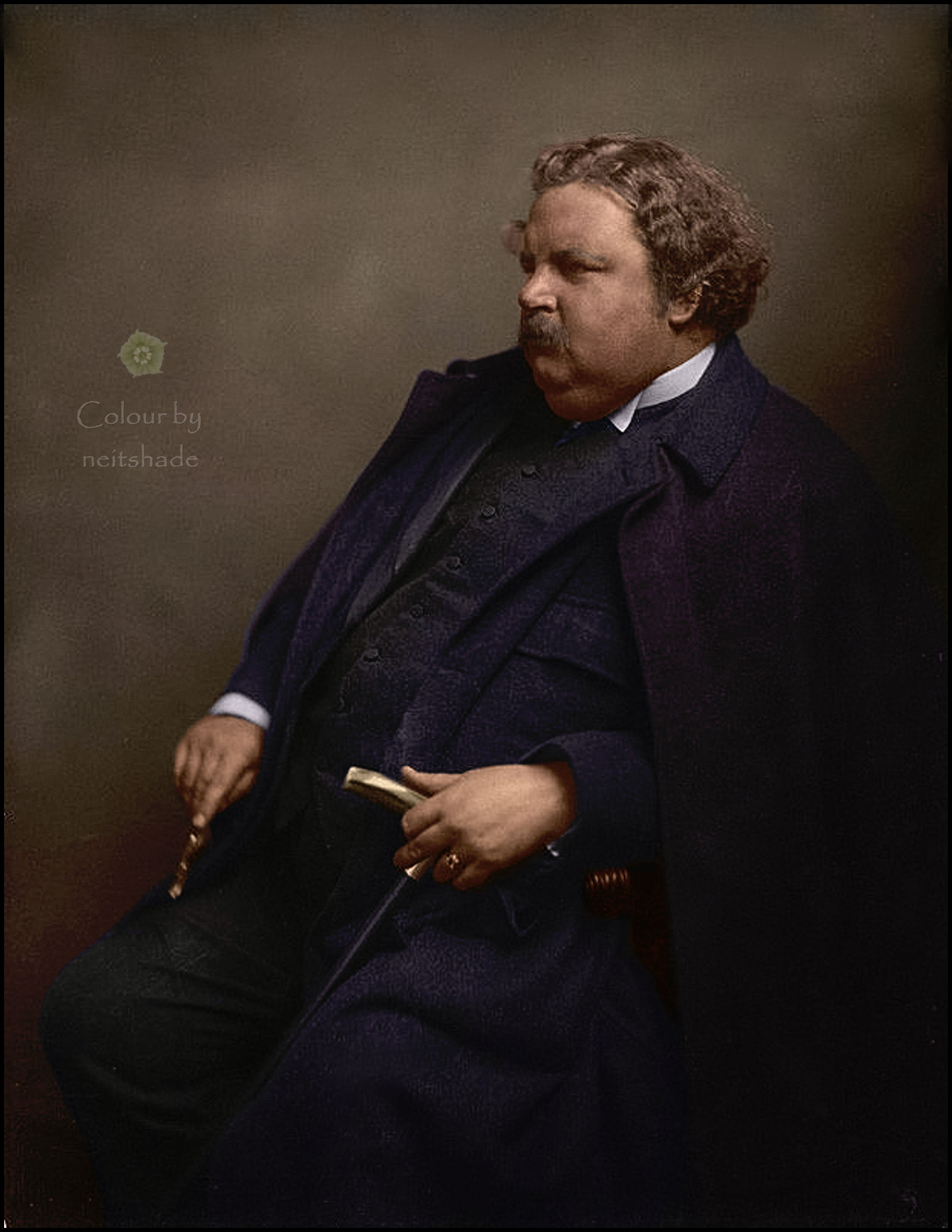
“In person Chesterton was a large man who was something of a strain on his clothes."
"...Here we might take the body as an illustration of the soul. Health is a simple and single thing – so long as you have got it. A young man walking in wild and sun for pleasure does not say. “How harmoniously my left lung is working,” or “I take particular pleasure in the nervous system of my right leg.” So long as those things are all right they are all one thing. And so, for all I know, there may be a spiritual state in which all truths are one truth, and that a simple and self-evident truth. For all I know, there may have been some Garden of Eden in which a man really did not need a theology, and could really be content with a religion. Nor need I deny that others; that children or a particular sort of poets may have some such short cut to paradise. But all such speculations are irrelevant in the face of admitted maladies or mishaps. If a man’s lung is threatened with pneumonia, it is no good to ask him why he is not content with the simple breath of life breathed into his nostrils by God in the Garden of Eden. It is no good to call medical details morbid or medical distinctions pedantic. If a man has had a fall and broken his leg, it is not helpful to urge him to continue the march of progress, or exult the ecstasy of perpetual motion. Still less is it helpful to complain of the ugliness of the anatomical diagrams from which the doctors learn how to mend his leg. But according to any sane philosophy that any sane person can possibly hold, it is obvious that man is at least very liable to fall somehow and break something. This being so, we cannot do without ugly diagrams and morbid details and pedantic distinctions. We cannot do without them in the case of the soul any more than in the case of the body. Or, to speak more strictly, we can do without them in the case of the body. Or, to speak more strictly, we can do without them for considerable periods of security and unconsciousness; but we always discover the need of them in hours of danger and disintegration. And when I said that the Catholic philosophy formulated in mediaeval times is still the foundation even of modern morality, I might say that it is in this sense the unconscious foundation. It is so, at least, where that morality is moral..."

Tuesday, December 2, 2014

“If your church was built on Simon Peter you have a rough foundation.”

This is kind of abstract but see this through.
In a debate between Karl Keating and Dr. Peter Ruckman the latter stated the following:

“If your church was built on Simon Peter you have a rough foundation.”

The thing is that God can use anyone he wants to do his will without defeating their own free will, but he always chooses the least so they can be seen as magnifying his glory. 

Consider the following examples:
Gideon’s remaining army
David
St. Mary Alacoque
St. Bernadette

Protestants tend to believe that Jesus wouldn’t use such a broken vessel like Peter who can do such good then have to be corrected sternly by Paul. It would be easy for God to take hold of Alexander the Great or a great Paraoh to do his will, but how much more amazing is it for him to use a sinner like you and I to change the whole world?
There is a beauty in God’s plan that we cant see often because our sin has darkened our vision.  I think GK Chesterton out of all people takes on and answers the Why Peter question the best in his book Heretics:


“Now this is, I say deliberately, the only defect in the greatness of Mr. Shaw, the only answer to his claim to be a great man, that he is not easily pleased. He is an almost solitary exception to the general and essential maxim, that little things please great minds. And from this absence of that most uproarious of all things, humility, comes incidentally the peculiar insistence on the Superman. After belaboring a great many people for a great many years for being unprogressive, Mr. Shaw has discovered, with characteristic sense, that it is very doubtful whether any existing human being with two legs can be progressive at all. Having come to doubt whether humanity can be combined with progress, most people, easily pleased, would have elected to abandon progress and remain with humanity. Mr. Shaw, not being easily pleased, decides to throw over humanity with all its limitations and go in for progress for its own sake. If man, as we know him, is incapable of the philosophy of progress, Mr. Shaw asks, not for a new kind of philosophy, but for a new kind of man. It is rather as if a nurse had tried a rather bitter food for some years on a baby, and on discovering that it was not suitable, should not throw away the food and ask for a new food, but throw the baby out of window, and ask for a new baby. Mr. Shaw cannot understand that the thing which is valuable and lovable in our eyes is man—the old beer-drinking, creed-making, fighting, failing, sensual, respectable man. And the things that have been founded on this creature immortally remain; the things that have been founded on the fancy of the Superman have died with the dying civilizations which alone have given them birth. When Christ at a symbolic moment was establishing His great society, He chose for its corner-stone neither the brilliant Paul nor the mystic John, but a shuffler, a snob a coward—in a word, a man. And upon this rock He has built His Church, and the gates of Hell have not prevailed against it. All the empires and the kingdoms have failed, because of this inherent and continual weakness, that they were founded by strong men and upon strong men. But this one thing, the historic Christian Church, was founded on a weak man, and for that reason it is indestructible. For no chain is stronger than its weakest link.

Tuesday, November 11, 2014

The Real Issue Today, with a little help from Chesterton


Source

“Pessimism is not in being tired of evil but in being tired of good. Despair does not lie in being weary of suffering, but in being weary of joy. It is when for some reason or other the good things in a society no longer work that the society begins to decline; when its food does not feed, when its cures do not cure, when its blessings refuse to bless.
- GK Chesterton The Everlasting Man

Wednesday, October 8, 2014

Synod key words: "Graduality"

It has come to my attention that many of the Cardinals and others attending the synod have been floating around a certain term, never heard before, to provide cover and support for +Kasper.

This word is "Graduality", and its definition is related to how the Church looks on protestants and other religions as having certain truths in them that the church can affirm. So too these promoters of Kasper want the Church to recognize that the irregular unions that are entered into can bring about good fruits.

My first thought is simple:


When a religious scheme is shattered (as Christianity was shattered at the Reformation), it is not merely the vices that are let loose. The vices are, indeed, let loose, and they wander and do damage. But the virtues are let loose also; and the virtues wander more wildly, and the virtues do more terrible damage. The modern world is full of the old Christian virtues gone mad. The virtues have gone mad because they have been isolated from each other and are wandering alone. Thus some scientists care for truth; and their truth is pitiless. Thus some humanitarians only care for pity; and their pity (I am sorry to say) is often untruthful - GK Chesterton, "Orthodoxy"

There might be good intentions and the couple might eventually be led back by natural events that occur within the marraige, that is one thing.  But lets not confuse having the Church affirm the disorder of entering into that is not a marraige by saying people can take communion because they have a possibility of coming back later.  Thats either Jesus or its not, and if it is that action is sacrelidge, plain and simple.

So Bishops and Pontiff, be BOLD, call people to take up their cross, for it is their salvation

+JMJ+

Friday, August 1, 2014

An awesome article on GK Chesterton by Fr. Leonard. Feeney (yes that one, but it is great!)

GKC
In person Chesterton was a large man who was something of a strain on his clothes. Tidiness he persistently ignored in favor of comfort. Everyone who got near him was tempted to rearrange him, or at least to giving thought as to how it could be done. Eventually Chesterton gave up the idea of expecting to be held together in ordinary attire by ordinary threads and buttons, and went around wearing a cloak. The simplicity with which one could secure a sort of stylish seclusion by the tying of a single knot or the fastening of a single hook appealed to Chesterton. A cloak was a garment calculated to reveal not how he was fashioned, but where he was to be found.

In point of kindliness, Chesterton had one of the biggest hearts that has ever lived. And yet I am told the doctors found it undersized physically when they examined him in one of his illnesses. Nothing daunted, he went right on using what share of heart he had to love the world largely and lavishly until the hour of his death. This is what is known as a paradox. 

When Chesterton stood up he was impressive. But it was even more marvelous to watch him sit down. He sat down with an air of supreme humility, as if totally collapsing in the arms of God. In the difficult assignment of being both huge and human he needed lots of support. Once seated, he would doze and dream a great deal, and seemed constantly distracted by the incessant rush of his own thoughts.

As humility was Chesterton’s outstanding moral virtue, so what he chose to call “sanity” was what he wanted most for the mind. He was far too humble to suppose that one could appropriate sanity as an assured possession without offering plenty of credentials. And so he undertook to outline what he meant by sanity perhaps more carefully than any man of his generation. One of his contemporaries, George Bernard Shaw, said sanity was the specialty of the superman. This pseudo-preternaturalism annoyed Chesterton, and his reply was devastating. “Shaw criticizes human nature,” he said, “as though he himself did not possess it.” Another contemporary, H. G. Wells, offered hope that sanity might blossom in some brain of the future. Chesterton was quick to analyze this mixture of biology and guesswork masquerading as prophecy, and he exposed it to relentless ridicule. In the end he made more of a monkey out of Wells than Evolution ever had.
The rest of the chapter is fantastic!  I know many people will scouff because its by Father Feeney, but Father was a great literary man in his day.  The comparison is often made to that of the Belloc of America.  

Read the rest HERE

Monday, June 30, 2014

In defense of Pickpockets?

GK Chesterton
“I have been asked to republish these notes--which appeared in a weekly paper--as a rough sketch of certain aspects of the institution of Private Property, now so completely forgotten amid the journalistic jubilations over Private Enterprise. The very fact that the publicists say so much of the latter and so little of the former is a measure of the moral tone of the times. A pickpocket is obviously a champion of private enterprise. But it would perhaps be an exaggeration to say that a pickpocket is a champion of private property. The point about Capitalism and Commercialism, as conducted of late, is that they have really preached the extension of business rather than the preservation of belongings; and have at best tried to disguise the pickpocket with some of the virtues of the pirate. The point about Communism is that it only reforms the pickpocket by forbidding pockets.

 Pockets and possessions generally seem to me to have not only a more normal but a more dignified defense than the rather dirty individualism that talks about private enterprise. In the hope that it may possibly help others to understand it, I have decided to reproduce these studies as they stand, hasty and sometimes merely topical as they were. It is indeed very hard to reproduce them in this form, because they were editorial notes to a controversy largely conducted by others; but the general idea is at least present. In any case, "private enterprise" is no very noble way of stating the truth of one of the Ten Commandments. But there was at least a time when it was more or less true. The Manchester Radicals preached a rather crude and cruel sort of competition; but at least they practiced what they preached. The newspapers now praising private enterprise are preaching the very opposite of anything that anybody dreams of practicing. The practical tendency of all trade and business to-day is towards big commercial combinations, often more imperial, more impersonal, more international than many a communist commonwealth-- things that are at least collective if not collectivist. It is all very well to repeat distractedly, "What are we coming to, with all this Bolshevism?" It is equally relevant to add, "What are we coming to, even without Bolshevism?" The obvious answer is--Monopoly. It is certainly not private enterprise. The American Trust is not private enterprise. It would be truer to call the Spanish Inquisition private judgment. Monopoly is neither private nor enterprising. It exists to prevent private enterprise. And that system of trust or monopoly, that complete destruction of property, would still be the present goal of all our progress, if there were not a Bolshevist in the world."

 The Outline of Sanity, GK Chesterton

Sunday, May 11, 2014

G.K. Chesterton on Motherhood

"Supposing it to be conceded that humanity has acted at least not unnaturally in dividing itself into two halves, respectively typifying the ideals of special talent and of general sanity (since they are genuinely difficult to combine completely in one mind), it is not difficult to see why the line of cleavage has followed the line of sex, or why the female became the emblem of the universal and the male of the special and superior.

 Two gigantic facts of nature fixed it thus: first, that the woman who frequently fulfilled her functions literally could not be specially prominent in experiment and adventure; and second, that the same natural operation surrounded her with very young children, who require to be taught not so much anything as everything. Babies need not to be taught a trade, but to be introduced to a world. To put the matter shortly, woman is generally shut up in a house with a human being at the time when he asks all the questions that there are, and some that there aren’t. It would be odd if she retained any of the narrowness of a specialist.

 Now if anyone says that this duty of general enlightenment (even when freed from modern rules and hours, and exercised more spontaneously by a more protected person) is in itself too exacting and oppressive, I can understand the view. I can only answer that our race has thought it worth while to cast this burden on women in order to keep common-sense in the world.

 But when people begin to talk about this domestic duty as not merely difficult but trivial and dreary, I simply give up the question. For I cannot with the utmost energy of imagination conceive what they mean. When domesticity, for instance, is called drudgery, all the difficulty arises from a double meaning in the word. If drudgery only means dreadfully hard work, I admit the woman drudges in the home, as a man might drudge at the Cathedral of Amiens or drudge behind a gun at Trafalgar. But if it means that the hard work is more heavy because it is trifling, colorless and of small import to the soul, then as I say, I give it up; I do not know what the words mean.

 To be Queen Elizabeth within a definite area, deciding sales, banquets, labors and holidays; to be Whiteley within a certain area, providing toys, boots, sheets, cakes and books, to be Aristotle within a certain area, teaching morals, manners, theology, and hygiene; I can understand how this might exhaust the mind, but I cannot imagine how it could narrow it. How can it be a large career to tell other people’s children about the Rule of Three, and a small career to tell one’s own children about the universe? How can it be broad to be the same thing to everyone, and narrow to be everything to someone? No; a woman’s function is laborious, but because it is gigantic, not because it is minute. I will pity Mrs. Jones for the hugeness of her task; I will never pity her for its smallness."

 -What’s Wrong with the World by G.K. Chesterton

Friday, February 14, 2014

On Kung, and the lunar light of a "happy suicide"

Last night I came across an article I saw on PewSitter by a Protestant author that explored the coming suicide of the Modernist theologian Hans Kung.  Before I go any farther this is not an endorsement of First Things, for this online magazine is just as guilty as Patheos in putting forth the indifferentist mentality. 

 However the title and the article was interesting and you can read the whole thing here

The article takes up the self-destructive attitude of Kung, who has, in the past, (and perhaps to this day) been handled with kid gloves in matters related to the various heresies he engages in and endorses.  During the reign of Paul VI there was no correction of his teachings by the Holy Office or by the supreme pontiff himself, and once Pope John Paul II finally found it necessary to remove the ability of Kung to call himself a "Catholic" theologian at the school he was spreading his madness at the pontiff was compared to the so-called "Grand-Inquisitors" of the so called "dark-ages", and supposedly against the Second Vatican Council (a note: JPII was instrumental in putting forth the documents that came out of the council like Guadem et Spes, and was not exactly happy when such things came under criticism). To this day Hans Kung represents himself as a Catholic, though admittedly dissenting, and has never been reprimanded for his heresies in any way other than getting "Catholic" ripped from his title.  

He has been a light to the gentiles that wished to remain gentiles, but his light, like lucifer (thats right, under-case, take that ya goomba) was not his own, and in his forgetfulness he has become prideful.  He now wishes to end his so called 'suffering life' via assisted suicide.  Now doesn't that sound nice, its assisted and hes suffering... lets be clear he is a coward, a heretic and a Pharaoh in his own right.  How many times did Pharaoh get signs to turn him to the light, but he focused on his lunar light (a false light of magic and philosophy of his day) taking shelter in his own mind for his pride was to great to break.  How long has the Church played patty cake with his soul, inviting him to speak with the Pope and talk nicely?  His mind is now so riddled with error and rot that he gleefully wishes to kill himself freely (is the poison subsidized?  Perhaps government funded in the Swiss alps) so as to give his freely given life back to God, as if that's his choice when to die.  

He goes on to joke about possibly dying the same way as Socrates drinking the potion, rather than having it injected.  The man needs his Bishop actively calling out his behavior, and calling him to repentance.  Has he?  I know of no Bishop that has called him out on his errors.  Stop playing tiddly-winks with heretics and set them in line.  Even the smallest error offends the Most High infinitly.  

To this point I now wish to remind the reader of what Chesterton said on the man who commits suicide:

I put these things not in their mature logical sequence, but as they came: and this view was cleared and sharpened by an accident of the time. Under the lengthening shadow of Ibsen, an argument arose whether it was not a very nice thing to murder one's self. Grave moderns told us that we must not even say "poor fellow," of a man who had blown his brains out, since he was an enviable person, and had only blown them out because of their exceptional excellence. Mr. William Archer even suggested that in the golden age there would be penny-in-the-slot machines, by which a man could kill himself for a penny. In all this I found myself utterly hostile to many who called themselves liberal and humane. Not only is suicide a sin, it is the sin. It is the ultimate and absolute evil, the refusal to take an interest in existence; the refusal to take the oath of loyalty to life. The man who kills a man, kills a man. The man who kills himself, kills all men; as far as he is concerned he wipes out the world. His act is worse (symbolically considered) than any rape or dynamite outrage. For it destroys all buildings: it insults all women. The thief is satisfied with diamonds; but the suicide is not: that is his crime. He cannot be bribed, even by the blazing stones of the Celestial City. The thief compliments the things he steals, if not the owner of them. But the suicide insults everything on earth by not stealing it. He defiles every flower by refusing to live for its sake. There is not a tiny creature in the cosmos at whom his death is not a sneer. When a man hangs himself on a tree, the leaves might fall off in anger and the birds fly away in fury: for each has received a personal affront. Of course there may be pathetic emotional excuses for the act. There often are for rape, and there almost always are for dynamite. But if it comes to clear ideas and the intelligent meaning of things, then there is much more rational and philosophic truth in the burial at the cross-roads and the stake driven through the body, than in Mr. Archer's suicidal automatic machines. There is a meaning in burying the suicide apart. The man's crime is different from other crimes—for it makes even crimes impossible.
About the same time I read a solemn flippancy by some free thinker: he said that a suicide was only the same as a martyr. The open fallacy of this helped to clear the question. Obviously a suicide is the opposite of a martyr. A martyr is a man who cares so much for something outside him, that he forgets his own personal life. A suicide is a man who cares so little for anything outside him, that he wants to see the last of everything. One wants something to begin: the other wants everything to end. In other words, the martyr is noble, exactly because (however he renounces the world or execrates all humanity) he confesses this ultimate link with life; he sets his heart outside himself: he dies that something may live. The suicide is ignoble because he has not this link with being: he is a mere destroyer; spiritually, he destroys the universe. And then I remembered the stake and the cross-roads, and the queer fact that Christianity had shown this weird harshness to the suicide. For Christianity had shown a wild encouragement of the martyr. Historic Christianity was accused, not entirely without reason, of carrying martyrdom and asceticism to a point, desolate and pessimistic. The early Christian martyrs talked of death with a horrible happiness. They blasphemed the beautiful duties of the body: they smelt the grave afar off like a field of flowers. All this has seemed to many the very poetry of pessimism. Yet there is the stake at the crossroads to show what Christianity thought of the pessimist.
This was the first of the long train of enigmas with which Christianity entered the discussion. And there went with it a peculiarity of which I shall have to speak more markedly, as a note of all Christian notions, but which distinctly began in this one. The Christian attitude to the martyr and the suicide was not what is so often affirmed in modern morals. It was not a matter of degree. It was not that a line must be drawn somewhere, and that the self-slayer in exaltation fell within the line, the self-slayer in sadness just beyond it. The Christian feeling evidently was not merely that the suicide was carrying martyrdom too far. The Christian feeling was furiously for one and furiously against the other: these two things that looked so much alike were at opposite ends of heaven and hell. One man flung away his life; he was so good that his dry bones could heal cities in pestilence. Another man flung away life; he was so bad that his bones would pollute his brethren's. I am not saying this fierceness was right; but why was it so fierce?
Here it was that I first found that my wandering feet were in some beaten track. Christianity had also felt this opposition of the martyr to the suicide: had it perhaps felt it for the same reason? Had Christianity felt what I felt, but could not (and cannot) express—this need for a first loyalty to things, and then for a ruinous reform of things? Then I remembered that it was actually the charge against Christianity that it combined these two things which I was wildly trying to combine. Christianity was accused, at one and the same time, of being too optimistic about the universe and of being too pessimistic about the world. The coincidence made me suddenly stand still.


 +JMJ+


Source

+Pray for the Holy Father+

Friday, January 24, 2014

Using the mirror as a literary tool, a nod to GK

This is the tone of fairy tales, and it is certainly not lawlessness or even liberty, though men under a mean modern tyranny may think it liberty by comparison. People out of Portland Gaol might think Fleet Street free; but closer study will prove that both fairies and journalists are the slaves of duty. Fairy godmothers seem at least as strict as other godmothers. Cinderella received a coach out of Wonderland and a coachman out of nowhere, but she received a command—which might have come out of Brixton—that she should be back by twelve. Also, she had a glass slipper; and it cannot be a coincidence that glass is so common a substance in folk-lore. This princess lives in a glass castle, that princess on a glass hill; this one sees all things in a mirror; they may all live in glass houses if they will not throw stones. For this thin glitter of glass everywhere is the expression of the fact that the happiness is bright but brittle, like the substance most easily smashed by a housemaid or a cat. And this fairy-tale sentiment also sank into me and became my sentiment towards the whole world. I felt and feel that life itself is as bright as the diamond, but as brittle as the window-pane; and when the heavens were compared to the terrible crystal I can remember a shudder. I was afraid that God would drop the cosmos with a crash.
Mirrors and Fairy land

Remember, however, that to be breakable is not the same as to be perishable. Strike a glass, and it will not endure an instant; simply do not strike it, and it will endure a thousand years. Such, it seemed, was the joy of man, either in elfland or on earth; the happiness depended on NOT DOING SOMETHING which you could at any moment do and which, very often, it was not obvious why you should not do. Now, the point here is that to ME this did not seem unjust. If the miller's third son said to the fairy, "Explain why I must not stand on my head in the fairy palace," the other might fairly reply, "Well, if it comes to that, explain the fairy palace." If Cinderella says, "How is it that I must leave the ball at twelve?" her godmother might answer, "How is it that you are going there till twelve?" If I leave a man in my will ten talking elephants and a hundred winged horses, he cannot complain if the conditions partake of the slight eccentricity of the gift. He must not look a winged horse in the mouth. And it seemed to me that existence was itself so very eccentric a legacy that I could not complain of not understanding the limitations of the vision when I did not understand the vision they limited. The frame was no stranger than the picture. The veto might well be as wild as the vision; it might be as startling as the sun, as elusive as the waters, as fantastic and terrible as the towering trees.
For this reason (we may call it the fairy godmother philosophy) I never could join the young men of my time in feeling what they called the general sentiment of REVOLT.

 I should have resisted, let us hope, any rules that were evil, and with these and their definition I shall deal in another chapter. But I did not feel disposed to resist any rule merely because it was mysterious. Estates are sometimes held by foolish forms, the breaking of a stick or the payment of a peppercorn: I was willing to hold the huge estate of earth and heaven by any such feudal fantasy. It could not well be wilder than the fact that I was allowed to hold it at all. At this stage I give only one ethical instance to show my meaning. I could never mix in the common murmur of that rising generation against monogamy, because no restriction on sex seemed so odd and unexpected as sex itself. To be allowed, like Endymion, to make love to the moon and then to complain that Jupiter kept his own moons in a harem seemed to me (bred on fairy tales like Endymion's) a vulgar anti-climax. Keeping to one woman is a small price for so much as seeing one woman. To complain that I could only be married once was like complaining that I had only been born once. It was incommensurate with the terrible excitement of which one was talking. It showed, not an exaggerated sensibility to sex, but a curious insensibility to it. A man is a fool who complains that he cannot enter Eden by five gates at once. Polygamy is a lack of the realization of sex; it is like a man plucking five pears in mere absence of mind. The aesthetes touched the last insane limits of language in their eulogy on lovely things. The thistledown made them weep; a burnished beetle brought them to their knees. Yet their emotion never impressed me for an instant, for this reason, that it never occurred to them to pay for their pleasure in any sort of symbolic sacrifice. Men (I felt) might fast forty days for the sake of hearing a blackbird sing. Men might go through fire to find a cowslip. Yet these lovers of beauty could not even keep sober for the blackbird. They would not go through common Christian marriage by way of recompense to the cowslip. Surely one might pay for extraordinary joy in ordinary morals. Oscar Wilde said that sunsets were not valued because we could not pay for sunsets. But Oscar Wilde was wrong; we can pay for sunsets. We can pay for them by not being Oscar Wilde.

GK Chesterton, Orthodoxy - Ch. 4

Friday, January 3, 2014

Sex, Bureaucracy and Chesterton (I know that covers all the topics)

American Chesterton Society


 The frightful punishment of mere sex emancipation is not anarchy but bureaucracy.” – GK Chesterton

Some think we should be grateful that Justice Sotomeyer [sic? i'm too lazy to check] for blocking the contraceptives mandate through injunction.  Forgive me for not politely applauding the judicial standstill that merely panders to appease rather than recognizing the grave evil that is at the basis of the mandates idealism.


Oh and since I'm hitting on Chesterton, the Holy Father Pope Francis quoted the Late great soon to be Servant of God on December 5th of 2013 saying the following as recounted on the vaticans website here:

The Pontiff then quoted the English author G. K. Chesterton (1874-1936), when speaking about heresy once said that a heresy is a truth, a word, a truth gone mad. “When Christian words lack Christ, they begin to head down the road of madness”. The prophet Isaiah, he added, clearly describes the nature of this madness. He says: “The Lord is an everlasting rock. For he has brought low the inhabitants of the height, the lofty city” (26:4-5). “The inhabitants of the height. A Christian word without Christ leads to vanity, to self assuredness, to pride, and to power for power’s sake. And the Lord brings these people low”.
Have a Great Weekend! 

Wednesday, November 27, 2013

Thanksgiving and the hodgepodge that follows

First a Happy Thanksgiving to you and yours!
I came across a great quote by Chesterton a while back on the holiday and it follows:
 “In America they have a feast to celebrate the arrival of the pilgrams. Here in England we should have a feast to celebrate their departure” – GK Chesterton
 
Considering how the puritans thought celebrating Christmas was wrong and continued working on such feast
A protestant on Christmas
days…catch that Scroog was actually common, especially in America until Teddy Roosevelt (a crappy progressive imho) called for it to be a day of rest from work.  That protestant work ethic at it again…what a joke.  Some like Glenn Beck actually are disappointed that we don’t work on Thanksgiving, I am personally happy to have off, and if someone tried to make me work on a Christmas day I would have to consider whether such a person was worth working for to begin with.  I actually wish we had siestas like the historically Catholic countries but the protestant work ethic holds money and power at its head seeking more, and hoarding as quick as possible, how I wish I lived in a Catholic confessional state… BTW I wouldn’t mind finding myself before an inquisitional court.

Oh and before I go I just wanted to recommend, as Vatican II did the idea of nobel simplicity to you, perhaps less choices though, too much variety here, hes making the poor feel bad…


h/t Rorate otherwise they will whine about it

Monday, October 28, 2013

What to Read?


source
Four years ago this would have been the last thing I would have ever written on because quite frankly books are boring…its like reading a pamphlet on pulling tonsils.  I think I can remember a handful of books that I enjoyed reading from the K-12 grades, some important like To Kill a Mocking Bird to something plain foolish as Goosebumps.  It’s the same thing with magazines, too few of them interested me.  I loved ESPN the Magazine because it was drowning in amazing pictures.  Other kids in middle school or high school would talk about having a stash of playboys or other pornographic mags.  To this day I thank the Lord that when I inquired to have my friends give me one they always declined.  Someone was watching over me…Thank you Guardian Angel!


I wanted to take a moment and provide a list of the books I am currently reading and recommend them to you for your own learning and enjoyment.

1.       I Am with You Always by Michael Davies, Neumann Press 1997
This book is primarily concerned with providing an apologetic against the scourge that is Sedevananctism.  Since I delve into areas where many criticize the post conciliar church I have been confronted constantly by sedevacantists (who deny that the Popes since either Pius XII or John XXIII are valid) calling me a heretic for holding that the seat was not vacant since the council.  If you enjoy apologetics and are interested in the topic of the indefectibility of the Church this short, 100 page book is for you!  Price: $12 on Amazon

2.       Glories of Mary by St. Alphonsus de Liguori
This Book takes an in depth look at the Salve Regina touching on issues like Mary as Mediatrix of all graces and even the assumption before it was solemnly proclaimed by Pius XII. This is a phenomenal work and I try to read a chapter every Sunday and focus on it for the week.  You will not be disappointed if you pick this title up. 

3.       Apologia Pro Marcel Lefebvre by Michael Davies
This 3 volume work is a defense of Monsignor Marcel Lefebvre, the controversial Archbishop who established and sustained the Priestly Society of Saint Pope Pius X (SSPX).  I myself am not an advocate for the society itself, especially in the way it is presently constituted, but it is interesting to get an impartial look at this controversial figure in the Churches history and examine his group and their purpose moving forward.  You can find this online for free at the SSPX Asia website.  Be critical in what is said as Mr. Davies is, Stay with Peter but be honest with actions as well.

Prof. Von Hildebrand (source)
4.       The Nature of Love by Dietrich von Hildebrand, St. Augustine’s Press 2009
This was considered Professor Hildebrand’s greatest work on what True Love really is.  Prof. Von Hildebrand was proclaimed by Ven. Pope Pius XII as the, count it, The Doctor of the Church for the 20th Century (JPII the “great” advocates will disagree but being stuck in the muds of Assisi don’t help their cause…im just kidding).  This is a really deep and scholarly book and I am only attacking this a few pages at a time and most often I have to go back and reread because its so dense. Yet this is a fantastic work and foundational in a world that calls things that are disordered love.


5.       Aquinas (Beginners Guides) by Edward Feser
A fantastic beginners book for Thomas Aquinas.  The book covers the life of St. Thomas his metaphysics, natural theology, psychology and ethics.  Other than Dr. Taylor Marshalls book which is free at his website I would recommend this work to people that really want a deep but not too scholarly look at the Doctor of Doctors for Holy Mother Church.  A fantastic read!
I will finish by recommending The Outline of Sanity magazine put out by the American Chesterton Society.  I think you can tell whats its about.  I think a years subscription is around $50, but its worth it especially if you’re a self proclaimed Chestertonian…like me…self proclaimed.


Alight that’s enough….time for cookies… or not
C is for Cookie!